Continuing the great Genesis Listening Post, we pick up with the Phil Collins Years.

Genesis – A Trick of the Tail – 1976
A new lead singer (Phil Collins after over 300 auditioned) and a new producer (Ex-Elton John engineer David Hentschel) and a new collection of (7/8, 9/8 and other time signature) songs.
All adds up to A Trick of the Tail.
In almost every way possible, Tail is the anti-Lamb. It's brighter, for one thing. And it's more rooted in the folky-Yes sound that made up Selling England. It's not quite a step backward and, though it doesn't really add anything to the catalog that we haven't heard before, the guys are pretty good (at 25!!!) at doing this stuff.
By the same token there is another turning point on the record. The song, “Mad, Man Moon” is the most treacly ballad I've heard from this group so far. Sure it has the changing time signatures and elliptical lyrics but it also smacks hard of mid-70s, Godspellian theater. I also notice that, for the first time I can remember, the songs are not credited to the band in its entirety. Individuals, like Banks on the onerous, “Moon”, are credit in pairs, save the opening and closing tracks, which are credited to the four.
And I think it's important to note that Tony Banks was, at first, inclined for Genesis to continue as an instrumental band after Gabriel quite. Why is this important? Because he is the only member credited on each song on this record, either solo, in pairs or in groups. The common denominator is Tony Banks.
It goes without saying that, should they have, indeed, become an instrumental only band they would have never scaled the heights they later would. (Interestingly, Collins was in a project that, this same year, would record instrumental jazz fusion. They were called Brand X)
Perhaps it's why Trick of the Tail is my least favorite Genesis record so far.
Grade C+
A Side: Los Endos
BlindSide: Entangled, Squonk
DownSide: Mad Man Moon

Genesis – Wind & Wuthering – 1976
The year the band took off to find a new singer must have been found the players either bored or antsy or...something because in 1976, during the height of disco & the emergence of punk, Genesis managed to put out not just A Trick of the Tail, but the lush and more traditionally constructed Wind & Wuthering. That's not to say that the boys have abandoned their diversionary prog rock roots. Far be it. However, as evident on the 10 minute opus, One for the Vine, the key/signature changes which at times seemed to be contingent more on whim than service, actually operate to help convey the ideas of the song. A magnum opus is now more about the balance of music, words and ideas. In the past the music seemed secondary to the second two. On W&W, that balance is finally achieved.
And then there's “Your Own Special Way”. A more obvious ballad the band has never recorded. Nor a more poppy song. Are they reaching for a broader audience? Settling down? Falling in love?
Perhaps none, perhaps all. It does sound like a band pulling itself away from self-conscious pretension toward wider acceptance. It smacks of the Genesis Gen-Xers would come to know best.
Wind & Wuthering runs out of steam/ideas before it ends and I can't help but wish that they had just decided to drop “Blood on the Rooftops” and “Unique Slumbers for the Sleepers” as they are the worst offenders of repetition and, hell, Floyd does this better. Even “In the Quiet Earth” could go, while it's a well crafted piece of synth driven prog-rock, I've sort of had my fill of that.
I, like Genesis, am ready to move on. “Afterglow” seems to be a farewell, unbeknownst to Banks, perhaps, when he wrote it.
Grade: C+
A Side: Your Own Special Way, Afterglow
BlindSide: One for the Vine, All in a Mouse's Night
DownSide: Blood on the Rooftops, Unique Slumbers for the Sleepers

Genesis – And Then There Were Three – 1978
Like the title says, by 1978 Mike Rutherford, Tony Banks & Phil Collins were all that was left of the classic Genesis line-up. It was no secret that Hackett was growing more and more disenchanted with the group. His songs were being routinely excluded from the bands' records and he had, let's face it, ambitions of his own beyond being the faceless guitarist for the prog-rockers.
With Gabriel putting out acclaimed product of his own and Hackett gone what would happen to the masters of effete progressive-jazz-alterna-rock?
They streamline, of course. They get with the program. It's 1978. Rock has reached anthemic heights with the likes of Boston and Styx and Foreigner, et al. Faced with the prospect of becoming redundant they strip away much of the filigree and go for infrastructure and pomp. This isn't to say that the album is without avant-garde excursions. Quite the contrary. The record itself points in a new direction while remaining fully entrenched in a familiar one. But a song like “Ballad of Big” while it shifts it's time sigs is also written with an ear toward “friendly”. I don't think this is conscious on the band's part. I think that's how Phil Collins is built. He's quite able to play experimental percussion, witness every single Gabriel-era Genesis record and his work with Brand X. But, once he's at the front-man helm something changed with this group. And the 10s of millions of records Collins has sold on his own prove that he's quite an easy pill for the MOR listener to swallow.
It's easy to put much of Three on in the background and read a book while it's playing but, for me, once you get to the plodding ballad, “Many Too Many” you just want to get up and put something else on. Fortunately it ends soon enough and we get to hear the first song with lyrics written entirely by Collins.
“Scenes from a Night's Dream”, based on the comic character, Little Nemo, is a not half bad entry if it is a bit of a harbinger of the simplicity to come. But, after that, we are given “The Lady Lies” a piece of pretensia so obnoxious that it's all I can do not to hit fast forward. In deference to the Listening Post project, I didn't but, oh, man, did I want to.
Weird that the album closes with “Follow You Follow Me”, their most obvious song and their biggest hit to date. Weird that its the ender. Maybe not so much since everything up to that was looking at and saying goodbye to a proggy past and, perhaps, just perhaps this is prelude.
I don't know. That's what I expect.
So, while And Then There Were Three heralds a new frontier it's also quite dull in that the territory it's traversing has been covered many times before.
Grade: C-
A Side: Follow You Follow Me
BlindSide: Nothing surprising here
DownSide: Many Too Many, The Lady Lies

Genesis – Duke -1980
Welcome to the 80s!
Farewell forever, Mellotron!
The transformation from quirky, over-wrought, over-intellectualized, avant-garde, progressive rock band into synth driven pop group starts here.
“Behind the Lines” is the album opener and it does so in a fashion that all at once suggests the opening credits of a Krofft Variety show and international Olympic gala. When Collins comes in the most striking thing is just how catchy the melody is. Shocking for anyone who grew up on the Gabriel-led Genesis.
The suite continues with the explosively opulent “Duchess” and descends into wrenching balladeering on “Guide Vocal”.
It's an exhilarating 15 minutes. And it doesn't stop there. The pomp of “Man of Our Times” is hard to ignore and difficult to hate, despite it pretentious grandiosity. What's most clear during the five minutes of this track is how important 80s Genesis was to the tapestry of music in the decade of decadence. Others may claim to have been the “voice of the 80s” but it's clear, without Genesis's transformation into stadium prog, the soundtracks to this decade would have been quite different.
“Misunderstanding” is the big hit you still hear on the radio and why not? Just typing that name has probably put that song in your ear and you will spend the rest of the day trying to get rid of. A song built on a mid-tempo doo-wop, it turns the traditional pop writing on it's head, where the chorus, like a drill boring into your skull, acts like the verses and the verses proceed in the place where the chorus should be. This is a time worn songwriting technique but “Misunderstanding” does it better than almost all of them. And it's foreshadowing is telling: This is the first salvo from the ubiquity that will be Phil Collins in the 80s.
After a cloying ballad that would have been rejected by a 70s Banks & Rutherford, we get to the NEXT big hit from Duke. “Turn it On Again” would become a sports anthem ala “We Will Rock You” or “Rock and Roll Pt. 2”. It has the added usefulness of being a perfect jingle to advertise classic rock stations. Which is where I remember it most. And like all the best anthems it's actually a depressing song about a guy who watches so much tv he thinks the people on it are real and his friends. Go, team!
“Alone Tonight” is a solemn bit of reflection by Rutherford. Starting off sparse, with just acoustic guitar and ambient keys, it blows open into an anthem as the drums push the chorus. Refusing to go whole hog into power pop the song keeps just one little toe in the waters of prog, but, really, it's obvious what the group's ambitions are at this point: Mainstream success.
While those songs are about as conventional as this band could possible sound at the time, it's not like Duke is a collection of ditties.
“Cul-De-Sac” should satisfy any fans need for grandiloquence and majestic pomposity. And “Duke's Travels”'s wrenchingly overwrought orchestrations, percussion breakdowns and time-signature changes
should be enough to prove to longtime fans that they haven't been fully abandoned....yet.
Grade: B+
A Side: Misunderstanding, Turn It On Again
BlindSide: Behind the Lines
DownSide: Heathaze, Please Don't Ask

Genesis – Genesis – 1983
I get it. Peter Gabriel had his moody percussion driven opener, “Intruder”. Phil had his with “In the Air Tonight”. It follows suit that the uber-group would do their own drilling, numbing version. “Mama” is rote. Actually, an effective song about a guy's obsession with a prostitute.
It's good. But it just smacks of pandering.
And then, “That's All”? Yes, this was a hit. But, how did it end up here and not on a Phil Collins record? It's such a bland, catchy single, it announces the absolute transformation in Genesis from relevant prog group to (s)hit machine.
Genesis is a pop record. Through and through. The drum machine is obvious. The programming lazy. And, thus, the record feels amateur in retrospect. It's not haphazard, but, rather, dated.
They try not to leave the proggies too far in the dust. The two part, “Home by the Sea” is a pop song backended with the mostly instrumental “Second Home By the Sea”, completely unmemorable stuff catering to an audience the group seems anxious to leave behind. Scratch that. It's the idiom they want to leave behind. This is here to get those people to continue to buy the records.
“Illegal Alien” is one of the most hateful, trite and insipid tracks this group has ever put out. You probably also know the other single, “Taking it All Too Hard”. I'm sorry about that.
“Just a Job to Do” is fun and toe-tapping. It's like the kind of latter day crap that Queen was putting out in the mid-80s. Roger Taylor-y stuff. If he was a better musician and could recognize a hook if it was offering him to blow him.
Talk about a nadir.
Grade: D+
A Side: That's All
BlindSide: Mama, Just a Job to Do
DownSide: Illegal Alien, Silver Rainbow

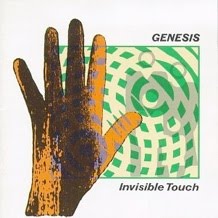
Genesis – Invisible Touch – 1986
Well, well, well. We are deep into that 80s sound now, huh? Where everything sounds like a montage from an urban comedy ala Working Girl or About Last Night or Tootsie or St. Elmo's Fire or White Knights......
This was one of THOSE albums in the era. The only song not released as a single was the instrumenta; track. This album had no less than 6 singles AND the 10 minute opus, Domino, charted anyway. That might have had something to with the two halves of it released as a pair of b-sides.
I'm going to give some props to the guys here. Not for the music, as that's pretty much by the numbers by now. No, for actually letting Tony Banks have some say in the songs. Hang on a sec. I know he's the guiding force behind the Mama band. Listen to that single. It could have fallen off No Jacket Required, easy. Or even Mike + the Mechanics. Its the flourishes that make it all geneside. That's a song that is a ready made top forty hit. And it was. Such a sad time for music. (When is pop music not sad, though?)
The second track is actually a redeemer in a way. It's the band channeling their inner Gabriel. Latter day Gabriel. “Tonight, tonight, tonight” is somewhere between his work and “In the Air...” Moody, redolent and ominous. It's a gigantic epic and it really works. More and more I am beginning to understand just how omnipresent and affecting Genesis was on the cultural landscape in that decade.
While we all remember the “Spitting Image” puppet video for “Land of Confusion”, it's actually not a half bad song. These guys are more socially conscious and also very adept at what they do. I like this song. I always have.
The whole first half of this record were singles. So, 86 was also the year of Genesis. “In Too Deep” was also part of the musical landscape. It was impossible to get away from. It wouldn't get you laid, even though it sort of promised to.
If you took a Lamb Lies era Genesis fan, put him/her in a box and sent them to the future 20 years and played this song, they would laugh in your face as you told them who it was, so far removed from where this band started....
The mania of “Anything She Does” draws me in in ways that other Tony Banks creations don't, usually leaving me cold. But, it's immediate as anything from the era.
“Domino” is a return to Genesis of old, in a way. It's a sprawling, mythological tale. But, without the crazy time signature changes that marked the old Genesis, its just a long disco epic.
Even though “Throwing it All Away” might as well be a Phil Collins solo track, by this point in the record, I'm kind of won over. So, it really doesn't bother me. And it's kind of catchy.
Invisible Touch is a solid record. Much more accessible than the previous one, probably because the band has decided that MOR is where they wanna live. I can see why this was a hit.
Grade: B
A Side: Invisible Touch, Tonight Tonight Tonight, Land of Confusion, In Too Deep, Throwing it All Away
BlindSide: Anything She Does

Genesis – We Can't Dance – 1991
It's been a while since I really was immersed in this Listening Post. What I keep coming back to from the very beginning of this album, starting with “No Son of Mine” is just how it sounds like a little bit Collins, a little Mike + the Mechanics and a twinge of Gabriel solo, even.
The second single, “Jesus, He Knows Me”, is a neat little attempt at irreverence, something the boys have never shied away from but it sounds, musically, like a reworking of Collins's “Don't Lose My Number”, and that works against it. “Driving the Last Spike” is about railway workers in the 19th century but it's just long and dull and, as the last song on the first side of the vinyl I KNOW I would have picked the needle way before the halfway mark. Fortunately, the title track is catchy as hell. These guys could write a hummable hit when they wanted to.
Then there's “Never a Time”. An unctuous ballad if ever there was one, made more disgusting by the fact that the working title was “B.B.H” as in Big Big Hit. Because the band was sure that was what it was going to be. Proving that they weren't interested in creating anything of merit anymore but just trying to cash in and make a buck. Hey, more power to them. But, you can do both, you know. Just look at Peter.
The rest of the album is as forgettable as it is ruinously boring. It’s a slap in the face of Genesis’s history at best. A money grab at its worst.
It isn't that We Can't Dance is bad. I mean, it is bad. But that's mainly because it's so boring, self-important and indignantly self-righteous. It crumbles under the weight of it's own ego. Not the individuals' egos. The album's.
I don't blame you if you bought this record 19 years ago. At least on the strength of the history of the band and the singles.
But if you love it, if you list it as one of your favorites of all time, you are a bad person and I hate you.
Grade: D
A Side: No Son of Mine, Jesus He Knows Me, I Can't Dance
BlindSide:
DownSide: Driving the Last Spike, Driving the Last Spike (It's so bad I had to list it twice), Never a Time, Hold on My Heart

Phil Collins – Face Value – 1981
While attempting to salvage his decaying marriage, even relocating to Vancouver to do so, Collins wrote a set of songs that he demoed. What he planned to do with them I don't know. But they became the basis for his debut as well as his next album.
A lot of these Listening Posts have been heard on various devices, stereos, car stereos, ipods, computer. Some, like this one, were heard with my wife's Bose Noise Canceling headphones. It makes a big difference.
“In The Air Tonight” vies for intimate torture with Peter Gabriel's “Intruder” but it's more ominous, more dangerous. And when those drums come in, it's not just an outtake from Freaks & Geeks, it's full bore manifestation of frustration, despair, hunger, sadness, redemption. It's perfect. This album, while predating the digital CD era by a few years, is ready made for the clean, sparseness of the compact disc. “This Must Be Love” takes the singer in another direction. He's fallen in love, even though the first song is a foreshadow of bad things to come, I get the feeling that this is the kind of song that Collins wrote to try to win his wife back. That he didn't makes the song even that sadder. Taken out of context, the song might be just a trifle of treacle. I can't remove myself from the iconography of the truth. And before that gets to set in, we are treated to the quasi-Motown, pseudo-Jackson 5 “Behind the Lines”, which takes the leanings that Paul Weller was trying with The Jam to a new place. One where everyone likes it. It's light years better here than it was on the Genesis album, Duke and it was great there.
Interesting to me is that, like Gabriel's first solo, this entire album is a triumph, but it's presented as though there were not expectations made of it. Not that it was a toss off, I doubt that Collins could do anything half assed. Face Value comes free of presumption, so it's free to take chances. It takes advantage on the lovely “The Roof is Leaking” and it's follow up track, the instrumental, “Drowned”, a percussion driven masterwork, outshining Genesis's best instrumental output by recognizing that less is more and more is more when it's in the right place. And that's taken to a new height on the other instrumental track, “Hand in Hand”, just a great piece.
One might think that a piano led ballad like “You Know What I Mean” might fail, especially after the bright “I Missed Again” and how much a Billy Joel piece of tripe it seems. It doesn't, unlike other Genesis ballads. The reason? It's 2.5 minutes long. And then it's gone. Before you completely hate it. In fact, wearing his heart on his stringed sleeve is actually sort of appealing. And before you know it we're back in familiar, horned, white soul territory with “Thunder and Lightning”.
The only draggy part of the record comes toward the end with the somnabulant “If Leaving Me is Easy”. Ok, Phil, I get it. She's gone. Be a man. Get over it.
The album recovers with the bookend of sorts to “In the Air”. The cover of “Tomorrow Never Knows” is given the total treatment, with hints of what has transpired. Heavy percussion. Tinges of horns. Some chaotic synths. It's a whirlygig of climaxes and it's a fitting end.
Face Value is a striking debut. Well worth every second. Well, almost.
Ah, fuck it. It's great.
Grade: A+
A Side: In The Air Tonight, Behind the Lines, I Missed Again
BlindSide: The Roof is Leaking, Drowned, Hand in Hand, Tomorrow Never Knows.
DownSide: If Leaving Me is Easy

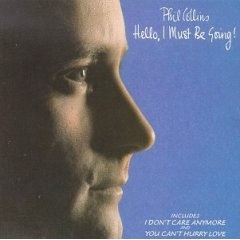
Phil Collins – Hello, I Must Be Going – 1982
Face Value was a hit. Who knew? I think it took Collins by surprise as much as anyone. After all, he was just writing songs about his dissolving marriage. He wasn't supposed to become a megastar.
But he did.
Apparently, he had enough for more than one record. While the title of this one might be mirthful, it takes it's name from the song by The Marx Brothers, the record is hardly that.
Opening with “In the Air Tonight Pt. 2”, I mean, “I Don't Care Anymore”, the album suggests an angry Collins. He's drumming with fervor. He's drumming with purpose. And yet, it still comes across as pandering, just a little bit. It worked before, right?
Except that it does work here. The song is a pretty well known hit for Collins.
This is the record that helped Phil on his climb to 80s world domination. It's the one with “You Can't Hurry Love” on it. That ubiquitous cover made memorable not just because it's such a beta male thing to sing a Supremes song, but because of that video. Remember the one? Phil was so cheeky, so lovable, singing backup for himself. He's like an elf.
An elf with a finger on the pulse of how to sell to the moribund radio listener. I don't know who was dancing to “I Cannot Believe it's True”. Someone was, though. They bought this thing. I have a sneaking suspicion it was Chicago fans. Because this sound is so much closer to smooth, toothless jazz than prog-rock, that it's remarkable.
Is there anything more obnoxious than when a singer affects a persona on record and it fails? How about when you don't buy the accent? How about when that singer is an Englishman putting on a cockney accent and failing miserably? That's “Like China”, a terrible song about a dolt trying to convince a girl to give him her virginity. Coming from someone in his 30s, with a crappo affectation, it's unseemly at best. At worst it's insulting.
I can hardly blame Collins for putting out music like this. After all, he's a drummer. Percussion is his muse. It makes perfect sense to cover “You Can't Kill This Song, er Hurry Love”, with it's so-memorable-it-hurts rhythm section. It's in his wheelhouse.
In the end I'm just over the White Boy Soul and no amount of horns n' hooks is gonna change that. And ugh, that instrumental pap at the end. “The West Side”. Kenny G shit at it's worst.
Grade: D
A Side: I Don't Care Anymore, You Can't Hurry Love
BlindSide: It Don't Matter to Me
DownSide: Like China, Do You Know Do You Care, Don't Let Him Steal Your Heart Away, The West Side, Why Can't It Wait Til Morning.

Phil Collins – No Jacket Required – 1985
Best Pop album of 1985. That's not me talking. That's them folks over at the Grammys. This album was a monster.
In the 80s there always seemed to be one record, one artist dominating the charts. 83: Michael Jackson. 84: Bruce Springsteen. 85: Phil Collins. 86: Paul Simon and on and on. I think Madonna's year was 89. One artist would have a release where all the forces came together: hit singles, past performance, fan base, videos. It all worked to sell bajillions.
In some cases (Bruce) it wasn't their best work (Born in the USA was great, yes, but not as brilliant as much of his earlier work. In some it was a culmination of all the stuff I just said AND a muse working it's brilliance, like Paul Simon's Graceland.
No Jacket Required falls into the aforementioned category. Not that Collins had that big a catalog to compare. Face Value was great. No Doubt. It's on Hello that he showed where he wanted to go with his sound: Straight line to the middle.
Face Value is a stark, personal, emotional, tense collection of songs. By an unlikely superstar. On No Jacket Required it is obvious. Phil had been spending a lot of time in the spotlight. He could be a cash machine. He could be his own man.
So, we get catchy and overlong singles like “Sussudio”, which was so annoying the 100th time you heard it back then that it's not refreshed by a 20+ year absence. And the overly precious, “One More Night”, which could have been recorded by Leo Sayer, 10 years before. And the weirdly infectious “Don't Lose My Number”, a song that sounds like Pat Benatar's “Love is a Battlefield”. With those ridiculously cold, inhuman drums.
“Only You Know and I Know” could be the soundtrack to a chase scene in Miami Vice.
There are places where Collins actually is effective. Once he lets down the white soul facade he's quite capable of writing a poignant ballad here and there. “Long Long Way to Go”, featuring Sting would have fit on the latter's post Police work quite nicely.
Perhaps the song that most exemplifies this record is “Who Said I Would”. It's rock in a jacket with rolled up sleeves. It doesn't break a sweat, though you imagine the performers bouncing back and forth, high fiving each other. Smiling, and swaying. It's also soul but has no real soul. No heart. It's empty calories but chewing it isn't even satisfying. The whole experience is nowhere near potato chips. It's more like flavored, sugar free gum. The taste lasts about as long as it takes to roll up and toss the paper the gum came in. Never “awful” but never good.
With this review I say goodbye to Phil Collins. Yes, I know there are a bunch more solo records but the original intent was to examine Genesis and, to an extent the offshoots and solo projects. I've gotten all I can from Phil. I've watched him go from drummer and backup singer, to lead singer, to solo artist to, well, multi-million seller and award winner.
What have I learned?
Phil, while being a consummate musician and brilliant drummer, is also a softy with an ear for the inoffensive. He's a “nice guy”. His music is “nice”. He won't challenge you. He won't inspire you. He might bore you a little. And he might actually get you to sing along a bit.
He's average.
Grade C
A Side: Sussudio, Don't Lose My Number, One More Night, Take Me Home
BlindSide: Long Long Way to Go
DownSide: Doesn't Anybody Stay Together Anymore